
PREDICTIVE MAINTENANCE

After the detection of Partial Discharge (PD) in insulated cables, the most important—and also the hardest to answer—question arises: does this defect represent a real risk of imminent failure, or can it be monitored?
In practice, most mistakes in predictive maintenance programs are not in the measurement itself, but in the interpretation of the results and in the incorrect assessment of the criticality of the identified defect. As a reference for concepts and procedures for partial discharge measurement, it is common to adopt IEC 60270 (High-voltage test techniques — Partial discharge measurements).
It’s still common to see evaluations based exclusively on discharge magnitude, expressed in picocoulombs (pC). However, using this criterion by itself can lead to wrong decisions.
Some typical examples:
In other words, magnitude does not automatically equal severity.
PRPD (Phase Resolved Partial Discharge) patterns provide valuable information about discharge repetitiveness, the electrical phase at which it occurs, and how stable the phenomenon is over time.
Although there is still no universal, standardized correlation between PRPD patterns and defect types, comparative analysis—combined with the analyst’s experience—allows for much more robust technical inferences than simply reading pC values.
The trend is that, as databases and artificial intelligence algorithms advance, this interpretation will become increasingly automated and reliable.
Practically speaking, some widely adopted technical guidelines are:
Assessing criticality in partial discharge testing requires an integrated view, combining electrical parameters, behavioral patterns, and knowledge of the system. Decisions based on simplified criteria tend to cause both unnecessary interventions and avoidable failures.
More than detecting PD, the real challenge is turning data into consistent technical decisions.
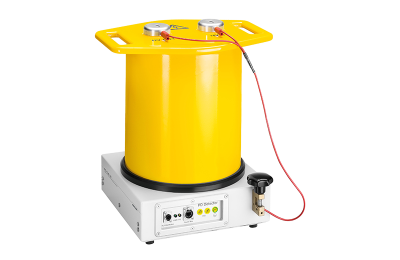
The PD-TaD 62 is a portable Partial Discharge diagnostic system used in conjunction with a VLF source for diagnosing medium-voltage insulated cables.
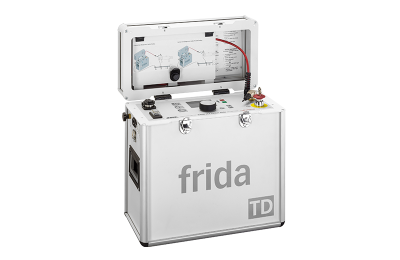
BAUR frida TD is the recommended device for performing VLF (Very Low Frequency) withstand test and dissipation factor (Tan Delta) test on insulated cables rated up to 12/20 kV.

BAUR viola TD is an device recommended for performing VLF (Very Low Frequency) withstand test and dissipation factor (Tan Delta) test on insulated cables rated up to 20/35 kV.
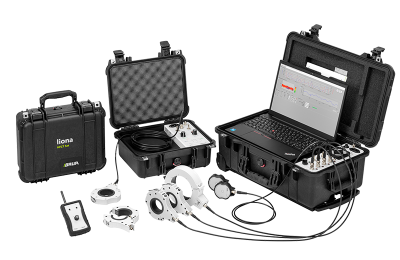
liona is a portable online PD spot tester for measuring and locating Partial Discharges in cables and switchgear during normal mains operation.
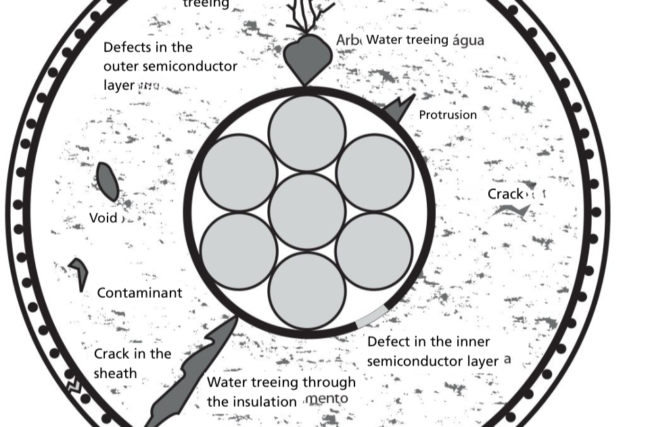
While Tan Delta measurement allows the evaluation of insulation...

Tan Delta, also known as the dielectric loss factor...

Effectively managing medium-voltage cable networks is crucial for optimizing...